Hook & L
Surface Conditioning · Product & Buyer Guide
Hook & Loop Non-Woven Abrasive Sanding Pads
Fast-change surface-conditioning pads for cleaning, blending, light deburring and decorative finishing on compatible metal surfaces. Choose 100, 125 or 150 mm diameter and confirm the required grade, backing system and safe operating speed before ordering.
100 / 125 / 150 mm Coarse / Medium / Fine Hook & loop backing Open-web construction OEM & wholesale supply
100 mm 4-inch option
125 mm 5-inch option
150 mm 6-inch option
3 Grades Process selection
Actual product construction and colour options
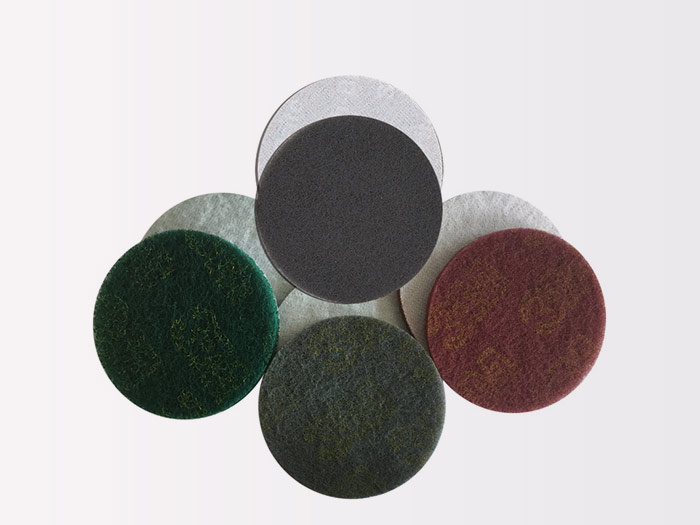
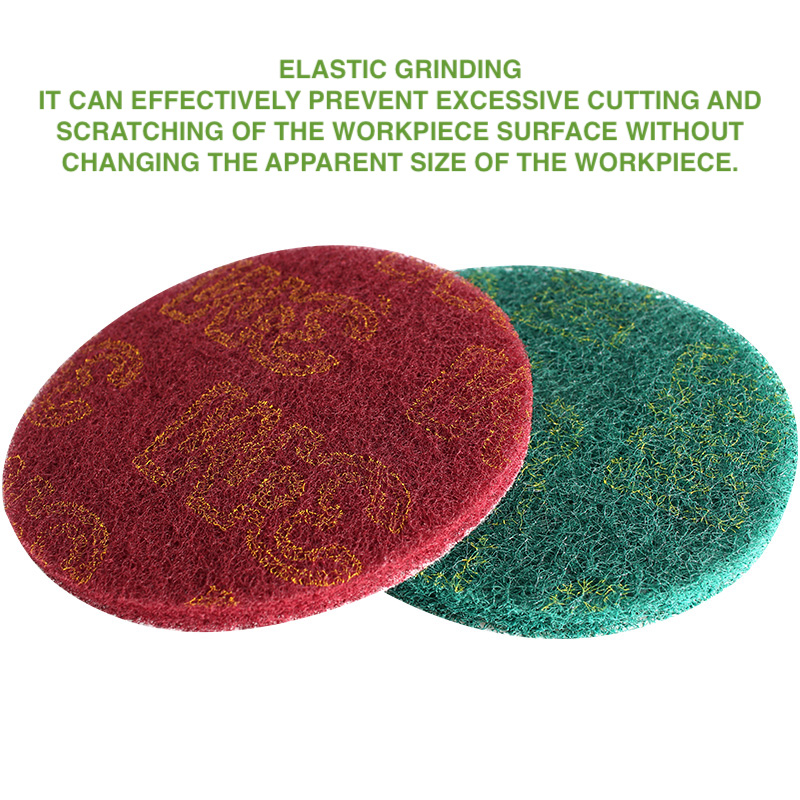
Front abrasive face & loop-backed reverse
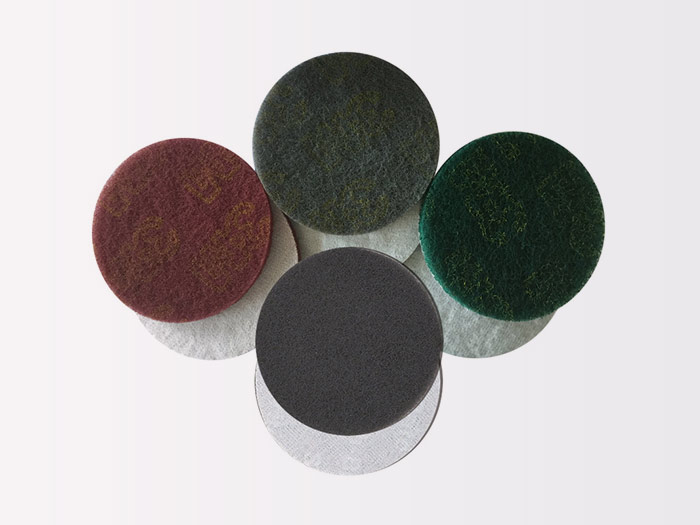
Colour and grade reference
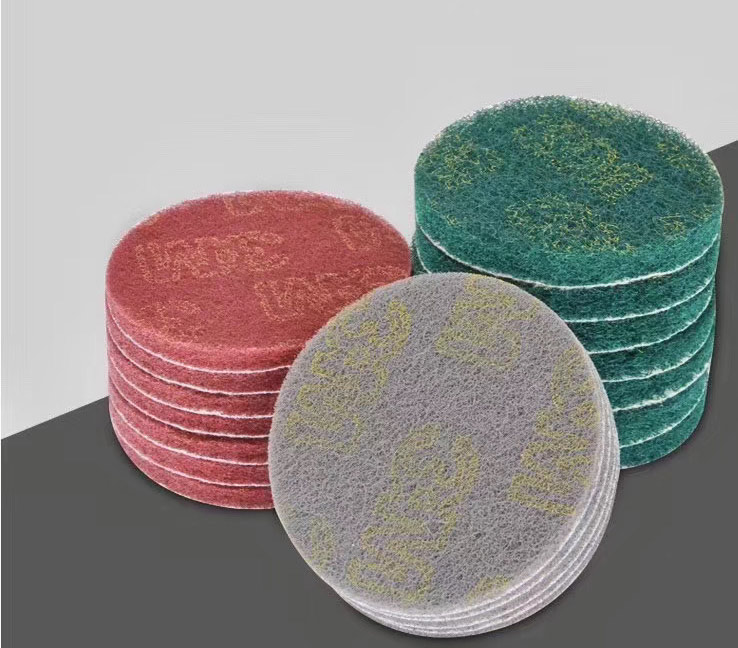
Industrial supply configuration
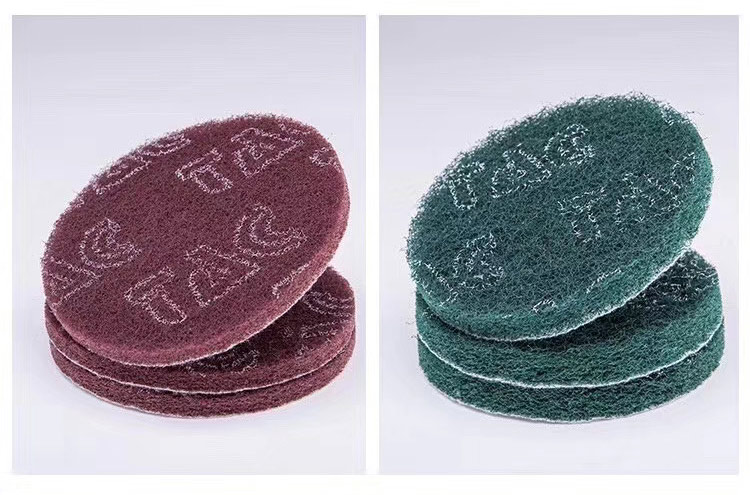
Flexible open-web construction
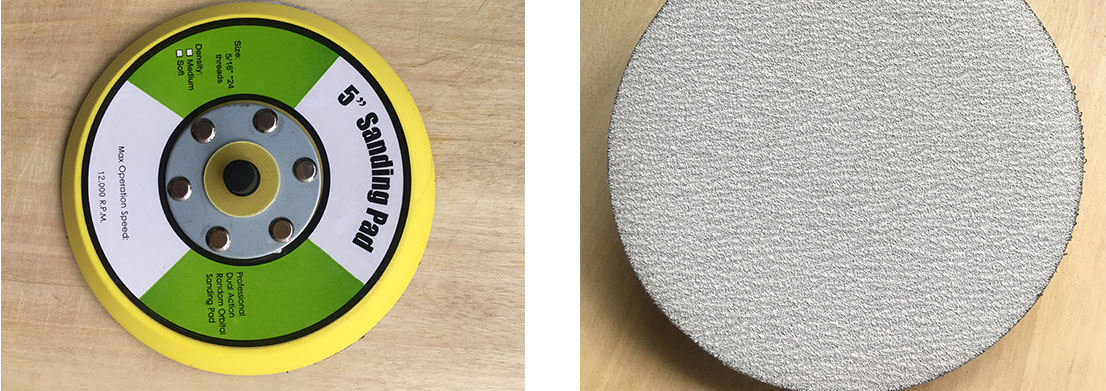
Hook-and-loop abrasive disc detail
Actual product photos are shown for construction and colour reference. Printed markings, colour tone, backing appearance and packing may vary by grade or production lot; confirm an approved sample for bulk orders.
Consistent surface conditioning with rapid disc changes
These hook and loop abrasive pads use a flexible non-woven web to follow gentle contours and maintain airflow around the working surface. Compared with conventional coated abrasive paper, the open structure is intended for cleaning and conditioning rather than heavy stock removal, helping operators create a more controlled scratch pattern.
01 Quick attachment
The loop-backed disc mounts to a compatible hook-faced backing pad, reducing changeover time between grades.
02 Open-web action
The porous fibre structure helps reduce loading and heat compared with a closed, flat abrasive surface under suitable conditions.
03 Controlled finishing
Flexible construction supports cleaning, blending and decorative finishing while preserving more of the workpiece geometry.
Choose the grade for the required finish
The supplied colour mapping below is a product reference, not a universal industry rule. Grade, abrasive mineral and scratch result can vary by manufacturer, material, tool speed and pressure. Approve samples on the actual workpiece before volume production.
Step 01 · Coarse
Green
For initial cleaning, oxidation removal and stronger surface conditioning where a more pronounced cut is acceptable.
Reference: approx. P120 effect Step 02 · Medium
Red
For general-purpose cleaning, blending and refining the scratch pattern left by the coarse stage.
Reference: approx. P240 effect Step 03 · Fine
Grey
For fine surface preparation, satin finishing and pre-coating or pre-polishing work where a lighter scratch is needed.
Reference: approx. P400 effect Grit-equivalence note: non-woven grades do not necessarily produce the same scratch depth as FEPA-coated abrasive paper of the stated P-grade. Treat P120/P240/P400 as selection references unless a tested specification states otherwise.
Product specifications
| Specification | Available information | Buyer confirmation |
| Product type | Hook & loop non-woven abrasive sanding pad / surface-conditioning disc | Confirm construction for the intended process |
| Diameter | 100 mm (4 in), 125 mm (5 in), 150 mm (6 in) | Must match the backing pad and tool capacity |
| Grade / colour | Green coarse Red medium Grey fine | Approve the grade and finish by sample |
| Backing | Loop backing for compatible hook-faced support pads | Confirm hook type, holding strength and interface pad if used |
| Abrasive structure | Flexible non-woven open web | Abrasive mineral, density and resin system confirmed by order |
| Centre configuration | Subject to selected model | Confirm centre hole or solid-disc requirement |
| Operating method | For an approved rotary or orbital system with compatible backing | Confirm machine type, speed range and maximum permitted RPM |
| Typical materials | Stainless steel, mild steel, aluminium, copper and selected alloys | Run a test for the exact alloy, coating and finish target |
| Typical processes | Cleaning, oxidation removal, blending, light deburring and finishing | Not a substitute for heavy grinding or stock removal |
| OEM options | Grade mix, labels and packing may be specified | MOQ, artwork, lead time and packing confirmed before order |
Compatibility warning: diameter alone does not confirm fit. The tool, backing pad, hook-and-loop interface, disc configuration, guard requirements and speed rating must all be compatible.
Three-stage metal-finishing workflow
When the starting condition and finish target require progressive refinement, test the three grades in sequence. Clean the surface between stages so loose abrasive or debris does not contaminate the next step.
Stage 01 Clean & condition
Use the green grade to address oxidation, staining and stronger surface contamination with controlled pressure.
Stage 02 Blend & refine
Use the red grade to reduce the previous scratch pattern and create a more even transition.
Stage 03 Finish & prepare
Use the grey grade for a finer satin surface or preparation before an approved coating or polishing stage.
Typical applications
A Oxidation and surface cleaning
Condition light rust, oxidation, residue and discolouration without the aggressive geometry change associated with heavy grinding.
B Weld-area blending
Refine surrounding scratches and transitions after the correct grinding step; not intended to remove substantial weld bead.
C Brushed or satin finishing
Create a directional decorative texture by maintaining consistent movement, overlap, pressure and tool orientation.
D Light edge deburring
Reduce small sharp edges and machining marks where a conformable finishing action is preferable to heavy cutting.
E Pre-coating preparation
Prepare selected surfaces for painting, plating, anodising or bonding only after process-specific adhesion testing.
F Maintenance work
Clean and refresh stainless-steel components, aluminium profiles, copper parts and fabricated metal surfaces.
How to select the correct pad
1. Identify the workpiece
State the metal or alloy, coating, starting condition, geometry and whether appearance or material removal is the priority.
2. Define the finish
Provide a reference sample, target scratch pattern, directional finish and acceptable colour or gloss variation.
3. Confirm the tool
Send the machine type, model, backing-pad diameter, hook face, speed range and dust-control arrangement.
4. Select grade and size
Choose 100, 125 or 150 mm and coarse, medium, fine or a mixed progression after a representative test.
5. Set process conditions
Control speed, pressure, dwell time, overlap and direction; test again when the alloy, coating or tool changes.
6. Specify the order
Include quantity, grade mix, packing, private label, destination, required documents and delivery schedule.
Operating and safety guidance
Inspect the disc, backing and hook-and-loop interface before every use; discard damaged, distorted or contaminated pads.
Use only a compatible machine and backing pad. Never exceed the lowest maximum speed marked on any component in the system.
Wear suitable eye, face, hearing, hand and respiratory protection, and use effective dust extraction according to local requirements.
Secure the workpiece, start with light pressure and keep the disc moving to limit heat, swirl marks and local over-cutting.
Do not use a surface-conditioning pad for heavy grinding, cut-off work or any application not approved for the exact product.
Test on an inconspicuous area before processing decorative, plated, coated, thin or heat-sensitive surfaces.
Frequently asked questions
What is the difference between a non-woven pad and a sandpaper disc?
Sandpaper uses abrasive grain on a relatively flat backing and is commonly selected for defined stock removal. A non-woven pad distributes abrasive through a flexible open web, making it useful for controlled cleaning, blending and surface conditioning. The two products are not directly interchangeable.
Do green, red and grey always represent the same grit?
No. Colour conventions and cut levels can differ between manufacturers. For this range, green is offered as coarse, red as medium and grey as fine; confirm the exact grade and approve the finish on your workpiece before bulk purchase.
Can these pads be used on stainless steel, aluminium and copper?
They may be selected for these materials, but the result depends on the alloy, starting surface, pad grade, tool speed and pressure. Test the exact combination, use light initial pressure and control heat on thin or soft workpieces.
Will a 125 mm disc fit every 5-inch sander or grinder?
No. Confirm the machine type, backing-pad diameter, hook face, centre configuration, guard requirements and speed rating. A matching nominal diameter alone does not guarantee safe attachment or operation.
Can a non-woven pad remove heavy rust, weld bead or deep scratches?
It is primarily a surface-conditioning product. Heavy rust, large weld beads and deep defects may require an approved grinding or coated-abrasive step first, followed by the non-woven pad for blending and finishing.
Can I order mixed grades or customised packing?
Mixed-grade and OEM packing options may be available. Send the diameter, grade mix, quantity, label artwork, packing requirement and destination so MOQ, sample availability, lead time and pricing can be confirmed.
Need samples or a wholesale quotation?
Send your tool, workpiece, diameter, grade, finish target, quantity, packing and destination for product confirmation and pricing.
Enquire on WhatsApp oop Non-Woven Abrasive Sanding
Hook & L
Surface Conditioning · Product & Buyer Guide
Hook & Loop Non-Woven Abrasive Sanding Pads
Fast-change surface-conditioning pads for cleaning, blending, light deburring and decorative finishing on compatible metal surfaces. Choose 100, 125 or 150 mm diameter and confirm the required grade, backing system and safe operating speed before ordering.
100 / 125 / 150 mm Coarse / Medium / Fine Hook & loop backing Open-web construction OEM & wholesale supply
100 mm 4-inch option
125 mm 5-inch option
150 mm 6-inch option
3 Grades Process selection
Actual product construction and colour options
Front abrasive face and white loop-backed reverseAvailable colour and grade referenceStacked pads for industrial supplyFlexible open-web construction for controlled surface conditioning
Actual product photos are shown for construction and colour reference. Printed markings, colour tone, backing appearance and packing may vary by grade or production lot; confirm an approved sample for bulk orders.
Consistent surface conditioning with rapid disc changes
These hook and loop abrasive pads use a flexible non-woven web to follow gentle contours and maintain airflow around the working surface. Compared with conventional coated abrasive paper, the open structure is intended for cleaning and conditioning rather than heavy stock removal, helping operators create a more controlled scratch pattern.
01 Quick attachment
The loop-backed disc mounts to a compatible hook-faced backing pad, reducing changeover time between grades.
02 Open-web action
The porous fibre structure helps reduce loading and heat compared with a closed, flat abrasive surface under suitable conditions.
03 Controlled finishing
Flexible construction supports cleaning, blending and decorative finishing while preserving more of the workpiece geometry.
Choose the grade for the required finish
The supplied colour mapping below is a product reference, not a universal industry rule. Grade, abrasive mineral and scratch result can vary by manufacturer, material, tool speed and pressure. Approve samples on the actual workpiece before volume production.
Step 01 · Coarse
Green
For initial cleaning, oxidation removal and stronger surface conditioning where a more pronounced cut is acceptable.
Reference: approx. P120 effect Step 02 · Medium
Red
For general-purpose cleaning, blending and refining the scratch pattern left by the coarse stage.
Reference: approx. P240 effect Step 03 · Fine
Grey
For fine surface preparation, satin finishing and pre-coating or pre-polishing work where a lighter scratch is needed.
Reference: approx. P400 effect Grit-equivalence note: non-woven grades do not necessarily produce the same scratch depth as FEPA-coated abrasive paper of the stated P-grade. Treat P120/P240/P400 as selection references unless a tested specification states otherwise.
Product specifications
| Specification | Available information | Buyer confirmation |
| Product type | Hook & loop non-woven abrasive sanding pad / surface-conditioning disc | Confirm construction for the intended process |
| Diameter | 100 mm (4 in), 125 mm (5 in), 150 mm (6 in) | Must match the backing pad and tool capacity |
| Grade / colour | Green coarse Red medium Grey fine | Approve the grade and finish by sample |
| Backing | Loop backing for compatible hook-faced support pads | Confirm hook type, holding strength and interface pad if used |
| Abrasive structure | Flexible non-woven open web | Abrasive mineral, density and resin system confirmed by order |
| Centre configuration | Subject to selected model | Confirm centre hole or solid-disc requirement |
| Operating method | For an approved rotary or orbital system with compatible backing | Confirm machine type, speed range and maximum permitted RPM |
| Typical materials | Stainless steel, mild steel, aluminium, copper and selected alloys | Run a test for the exact alloy, coating and finish target |
| Typical processes | Cleaning, oxidation removal, blending, light deburring and finishing | Not a substitute for heavy grinding or stock removal |
| OEM options | Grade mix, labels and packing may be specified | MOQ, artwork, lead time and packing confirmed before order |
Compatibility warning: diameter alone does not confirm fit. The tool, backing pad, hook-and-loop interface, disc configuration, guard requirements and speed rating must all be compatible.
Three-stage metal-finishing workflow
When the starting condition and finish target require progressive refinement, test the three grades in sequence. Clean the surface between stages so loose abrasive or debris does not contaminate the next step.
Stage 01 Clean & condition
Use the green grade to address oxidation, staining and stronger surface contamination with controlled pressure.
Stage 02 Blend & refine
Use the red grade to reduce the previous scratch pattern and create a more even transition.
Stage 03 Finish & prepare
Use the grey grade for a finer satin surface or preparation before an approved coating or polishing stage.
Typical applications
A Oxidation and surface cleaning
Condition light rust, oxidation, residue and discolouration without the aggressive geometry change associated with heavy grinding.
B Weld-area blending
Refine surrounding scratches and transitions after the correct grinding step; not intended to remove substantial weld bead.
C Brushed or satin finishing
Create a directional decorative texture by maintaining consistent movement, overlap, pressure and tool orientation.
D Light edge deburring
Reduce small sharp edges and machining marks where a conformable finishing action is preferable to heavy cutting.
E Pre-coating preparation
Prepare selected surfaces for painting, plating, anodising or bonding only after process-specific adhesion testing.
F Maintenance work
Clean and refresh stainless-steel components, aluminium profiles, copper parts and fabricated metal surfaces.
How to select the correct pad
1. Identify the workpiece
State the metal or alloy, coating, starting condition, geometry and whether appearance or material removal is the priority.
2. Define the finish
Provide a reference sample, target scratch pattern, directional finish and acceptable colour or gloss variation.
3. Confirm the tool
Send the machine type, model, backing-pad diameter, hook face, speed range and dust-control arrangement.
4. Select grade and size
Choose 100, 125 or 150 mm and coarse, medium, fine or a mixed progression after a representative test.
5. Set process conditions
Control speed, pressure, dwell time, overlap and direction; test again when the alloy, coating or tool changes.
6. Specify the order
Include quantity, grade mix, packing, private label, destination, required documents and delivery schedule.
Operating and safety guidance
-
Inspect the disc, backing and hook-and-loop interface before every use; discard damaged, distorted or contaminated pads.
-
Use only a compatible machine and backing pad. Never exceed the lowest maximum speed marked on any component in the system.
-
Wear suitable eye, face, hearing, hand and respiratory protection, and use effective dust extraction according to local requirements.
-
Secure the workpiece, start with light pressure and keep the disc moving to limit heat, swirl marks and local over-cutting.
-
Do not use a surface-conditioning pad for heavy grinding, cut-off work or any application not approved for the exact product.
-
Test on an inconspicuous area before processing decorative, plated, coated, thin or heat-sensitive surfaces.
Frequently asked questions
What is the difference between a non-woven pad and a sandpaper disc?
Sandpaper uses abrasive grain on a relatively flat backing and is commonly selected for defined stock removal. A non-woven pad distributes abrasive through a flexible open web, making it useful for controlled cleaning, blending and surface conditioning. The two products are not directly interchangeable.
Do green, red and grey always represent the same grit?
No. Colour conventions and cut levels can differ between manufacturers. For this range, green is offered as coarse, red as medium and grey as fine; confirm the exact grade and approve the finish on your workpiece before bulk purchase.
Can these pads be used on stainless steel, aluminium and copper?
They may be selected for these materials, but the result depends on the alloy, starting surface, pad grade, tool speed and pressure. Test the exact combination, use light initial pressure and control heat on thin or soft workpieces.
Will a 125 mm disc fit every 5-inch sander or grinder?
No. Confirm the machine type, backing-pad diameter, hook face, centre configuration, guard requirements and speed rating. A matching nominal diameter alone does not guarantee safe attachment or operation.
Can a non-woven pad remove heavy rust, weld bead or deep scratches?
It is primarily a surface-conditioning product. Heavy rust, large weld beads and deep defects may require an approved grinding or coated-abrasive step first, followed by the non-woven pad for blending and finishing.
Can I order mixed grades or customised packing?
Mixed-grade and OEM packing options may be available. Send the diameter, grade mix, quantity, label artwork, packing requirement and destination so MOQ, sample availability, lead time and pricing can be confirmed.
Need samples or a wholesale quotation?
Send your tool, workpiece, diameter, grade, finish target, quantity, packing and destination for product confirmation and pricing.
Enquire on WhatsApp oop Non-Woven Abrasive Sanding