meta name="google-site-verification" content="XXXXXXXXXXX " /
PRODUCTS
You are here: Home » Products » Abrasive » Abrasive Hook & Loop Sanding Paper Discs — Complete Buyer's Guide

Abrasive Hook & Loop Sanding Paper Discs — Complete Buyer's Guide

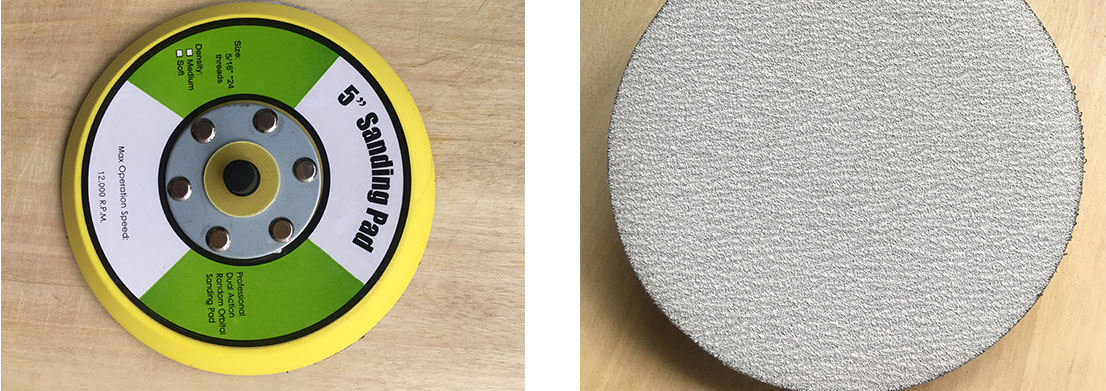
Hook-and-loop sanding paper discs are circular abrasive sheets with a Velcro-style backing. The disc face carries abrasive grains — either aluminum oxide or silicon carbide — bonded to a paper or cloth substrate. The reverse side features a loop (or hook) fabric layer that mates with the opposing hook (or loop) pad on a random orbital sander, orbital sander, or compatible backup pad.
Availability:
Quantity:
sharethis sharing button
  • 2inch-9inch

  • 沂禾

  • 6805200000

Abrasive Products Guide

Abrasive Hook & Loop Sanding Paper Discs — Complete Buyer's Guide

From coarse stock removal at 60# to ultra-fine finishing at 400#, hook and loop sanding paper discs offer the broadest grit range of any disc format — combined with a tool-free swap system that keeps multi-stage sanding fast and seamless. This guide covers everything: abrasive types, colour coding, size selection, backing options, and application best practices.

Grits: 60# – 400# 6 colour options Sizes: 2" – 9" 100 pcs/box (4"–6") Free samples available


Sandpapaer-Disc


Sandpapaer-Disc

What are hook-and-loop sanding paper discs?

Hook-and-loop sanding paper discs are circular abrasive sheets with a Velcro-style backing. The disc face carries abrasive grains — either aluminum oxide or silicon carbide — bonded to a paper or cloth substrate. The reverse side features a loop (or hook) fabric layer that mates with the opposing hook (or loop) pad on a random orbital sander, orbital sander, or compatible backup pad.

The result is a disc that attaches firmly under load, yet peels away cleanly in seconds when you need to change grits — no adhesive residue, no tool required. This makes hook and loop the dominant attachment system for disc sanders in woodworking, metalworking, auto body, and general surface preparation.

Key features

Tool-free grit changes
Peel and place in under five seconds. Ideal for multi-stage finishing sequences where frequent swaps slow you down.
Self-fracturing aluminum oxide
Grains fracture during use to continuously expose fresh, sharp cutting edges — extending disc life and maintaining consistent cut rate.
Non-filling / anti-clog
Resists loading on paint, wood resins, and soft materials — more uniform polishing lines and longer usable life per disc.
Paper or cloth backing
Softer and more flexible than standard latex paper. Conforms to irregular surfaces and resists tearing at edges.
60# to 400# grit range
The full spectrum from aggressive material removal to ultra-fine pre-polish finishing — all in one disc family.
Custom specifications
OEM and custom orders available — diameter, grit, grain type, backing material, colour, and pack size on request.


Sandpapaer-Disc

Abrasive grain types: aluminum oxide vs silicon carbide

Both grains are available across the range. Choosing the right one for your material type directly affects cut speed, surface finish quality, and disc longevity.

Property Aluminum oxide (AO) Silicon carbide (SiC)
Hardness High Very high — harder than AO
Fracture behaviour Self-fracturing: renews sharp edges during use Friable: sharp but wears faster
Ideal materials Wood, MDF, soft metals, painted surfaces, composites Hard metals, glass, ceramics, stone, plastics
Finish quality Consistent, uniform scratch pattern Finer, smoother finish at equivalent grit
Disc lifespan Long — preferred for production use Shorter — best for precision finishing tasks
Common grit range 60# – 400# full range 120# – 400# (fine finishing emphasis)

Disc colour guide

These discs are available in six colours. Colour may indicate grain type, grit range, or backing material depending on the manufacturer's coding. Always verify the specification label — colour coding is not universally standardised across brands.

Red
Often medium grit; common on standard AO discs
Green
Typically coarse; silicon carbide or heavy-duty AO
White
Fine to very fine grit; stearated / anti-clog coating
Yellow
General purpose; wide grit range across AO variants
Black
Silicon carbide; wet/dry applications, hard surfaces
Purple
Premium ceramic or zirconia grain; high-performance use

Grit selection — what each grade does

Grit number controls aggressiveness and finish quality. Work through grits progressively — each pass removes the scratch pattern of the previous grit. Never skip more than one grit step.

60# coarse
Aggressive stock removal — stripping paint, coatings, and heavy surface damage. Fast but leaves deep scratches requiring follow-up grits.
80# coarse
Heavy sanding, shaping, and levelling. Removes deep scratches from 60# and prepares for medium grits.
120# medium
General surface preparation, removing 80# marks, and pre-stain sanding on wood. A versatile all-round starting grit for clean surfaces.
180# medium
Pre-finish smoothing before the first coat of paint, primer, or varnish. Removes 120# scratches efficiently.
240# fine
Between-coat sanding of paint, varnish, and lacquer. Produces a surface ready for a final topcoat.
320# fine
Final sanding before top coat; light prep on plastics. Leaves a very fine, consistent scratch pattern.
400# very fine
Ultra-fine finishing, wet sanding, and removing minor surface blemishes before buffing or polishing.

Bar length represents relative material removal rate.

Full product specifications

Specification Detail
Type Abrasive hook and loop sanding paper disc
Available grits 60#80#120#180#240#320#400#
Abrasive grain Aluminum oxide  |  Silicon carbide
Backing Paper (glue bond) or velvet — softer and more break-resistant than standard latex paper
Attachment system Hook and loop (velcro-style) — tool-free, re-attachable
Sizes 2" through 9" (50 mm – 225 mm)
Colours Red, green, white, yellow, black, purple
Pack size 100 pcs / box for 4", 5", 6" discs (other sizes available)
Customisation OEM available — diameter, grit, grain, backing, colour, and packaging
Samples Free samples available; buyer covers shipping

Backing types: paper vs velvet

Both paper and velvet (cloth) backings are available. The choice affects how the disc handles, conforms to the surface, and resists tearing during use.

Property Paper backing Velvet / cloth backing
Flexibility Moderate — suited to flat and near-flat surfaces High — conforms to curves and contours
Tear resistance Good with quality paper; can tear at disc edge under high load Superior — fibrous structure resists edge tearing
Finish uniformity Consistent scratch pattern on flat surfaces More consistent on irregular or shaped surfaces
Best for Flat panels, furniture, metalwork, auto body Contoured surfaces, profile sanding, fine finishing
Cost Lower — standard choice for production use Higher — premium option for finishing-critical work

Safety and usage guidelines

Wear appropriate PPE
Always use safety glasses or a face shield and an appropriate dust mask or respirator. Fine abrasive dust — especially from MDF, silica-containing materials, and metal — poses a serious inhalation risk. Work in a ventilated area and use a sander with dust extraction where possible.
Select the right grit for the task
Starting too fine wastes time; starting too coarse leaves deep scratches that take multiple passes to remove. Begin coarse enough to address the surface condition, then progress through grits incrementally. Do not skip more than one grit step.
Check size and backing pad compatibility
Disc diameter must match your sander's backing pad. Using an undersized disc exposes the backing pad edge, causing rapid wear. Confirm the hook and loop systems are compatible — hook on the pad, loop on the disc (or vice versa, depending on the tool).
Avoid excessive pressure and heat
Let the abrasive do the work. Excessive downward pressure accelerates disc wear, glazes the abrasive, and generates heat that can scorch wood or warp thin metal. Use moderate, consistent pressure and keep the sander moving at all times.
Recognise when to replace a disc

Replace when the disc no longer cuts efficiently at normal pressure, when the abrasive surface appears shiny or glazed, or when the paper or cloth backing shows cracking or delamination. A worn disc worked harder generates heat without removing material effectively.


Frequently asked questions

What is the difference between hook-and-loop and PSA (adhesive) sanding discs?
Hook-and-loop discs attach via a Velcro-style system and can be removed and reattached multiple times without losing grip — making them ideal for work that requires frequent grit changes. PSA (pressure-sensitive adhesive) discs use a peel-and-stick adhesive backing and bond more firmly, but cannot be reattached once removed. Hook and loop is generally preferred for multi-stage sanding; PSA suits long runs on a single grit where disc changes are infrequent.
Can hook-and-loop sanding discs be used wet?
It depends on the backing material. Silicon carbide discs on a film or waterproof cloth backing can be used wet — wet sanding lubricates the surface, reduces heat, minimises dust, and produces a finer finish on paint, lacquer, and metal. Standard paper-backed aluminum oxide discs are generally not suitable for wet use as the paper backing can delaminate. Check the disc specification before wet sanding; look for discs explicitly labelled as wet/dry capable.
What do the different disc colours mean — red, green, white, yellow, black, purple?
Disc colour can indicate grain type, grit range, or backing material and varies by manufacturer. Common conventions: green often signals silicon carbide or coarse-grade discs; white typically indicates a stearated (anti-clog) fine-grit disc; black generally means silicon carbide for wet/dry use; purple may indicate a premium ceramic or zirconia abrasive. Red and yellow are used across general-purpose aluminum oxide ranges. Always read the product label rather than relying on colour alone, as there is no universal standard.
How do I choose the right disc size for my sander?
Match the disc diameter exactly to your sander's backing pad size. The most common sizes are 5" (125 mm) for standard random orbital sanders and 6" (150 mm) for larger orbital and dual-action sanders. Using a disc smaller than the pad exposes the pad edge, causing accelerated wear and uneven sanding. Using an oversized disc causes the edges to lift and catch. Check your sander's manual or the backing pad for the correct diameter and hole pattern.
What grit sanding disc should I use for bare wood before painting?
For bare wood before painting, the final sanding grit depends on the wood species and paint type. As a general rule: finish at 120# for coarser-grained woods (oak, ash) and at 150#–180# for finer-grained species (maple, cherry, MDF). Avoid going finer than 180# before water-based paint — very fine grits close the grain and can reduce paint adhesion. For primer, 120#–150# is sufficient. Sand with the grain on solid wood to avoid cross-grain scratches showing through the finish.
Are custom grit, size, and colour specifications available for bulk orders?
Yes. Custom specifications are available for OEM and trade buyers, including non-standard diameters (2" through 9"), specific grit values, choice of abrasive grain (aluminum oxide or silicon carbide), backing material (paper or velvet), disc colour, hole pattern, and packaging quantities. Free samples are available to verify quality before placing a full order — buyers cover the shipping cost. Contact the supplier directly to discuss minimum order quantities and lead times.
Request free samples or discuss a custom specification
OEM orders accepted. Buyer covers shipping on sample requests.


Previous: 
Next: 
YUPING MERCHANDISE
Linyi Yuping Merchandise Co., Ltd. is an intergrated company of industry and trade.
QUICK LINKS
PRODUCT CATEGORIES
CONTCAT US
   linyiyuping@hotmail.com
  +86-15605390885
 1206-069,NO.100 LINGONG ROAD, LINYI CITY, SHANDONG, CHINA
Copyright © 2021 Linyi Yuping Merchandise Co., Ltd.   Technology by leadong