Natural Wood Material
Rotary Cut Birch Veneer: The Versatile Choice for Plywood and Furniture
Wide-sheet, economically produced birch veneer in white and yellow varieties — sourced from China, Russia, Latvia, and Estonia for plywood facing, cabinetry, curved parts, and interior decoration.
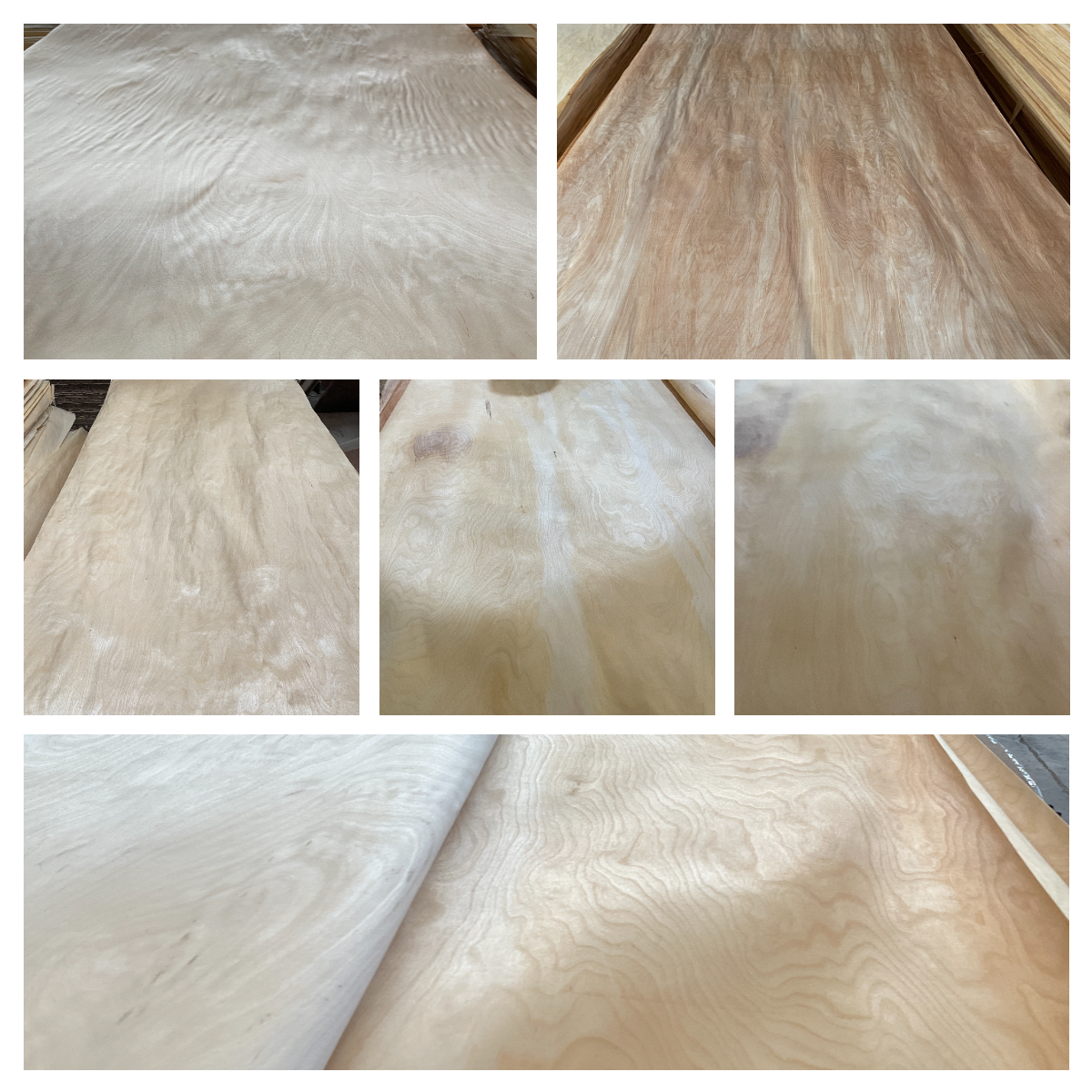
What is rotary cut birch veneer?
How rotary cutting produces wide, consistent sheets
Rotary cut veneer is made by mounting a debarked birch log on a lathe and peeling it in a single continuous spiral — the same principle as unwinding a roll of paper. Because the cut follows the log's annual growth rings, the resulting sheets are wide, flat, and free of the grain interruptions caused by flat-slicing or quarter-sawing. This makes rotary cutting the most material-efficient and cost-effective veneer production method, and the reason it is the dominant face material for structural and decorative plywood worldwide.
White birch vs yellow birch
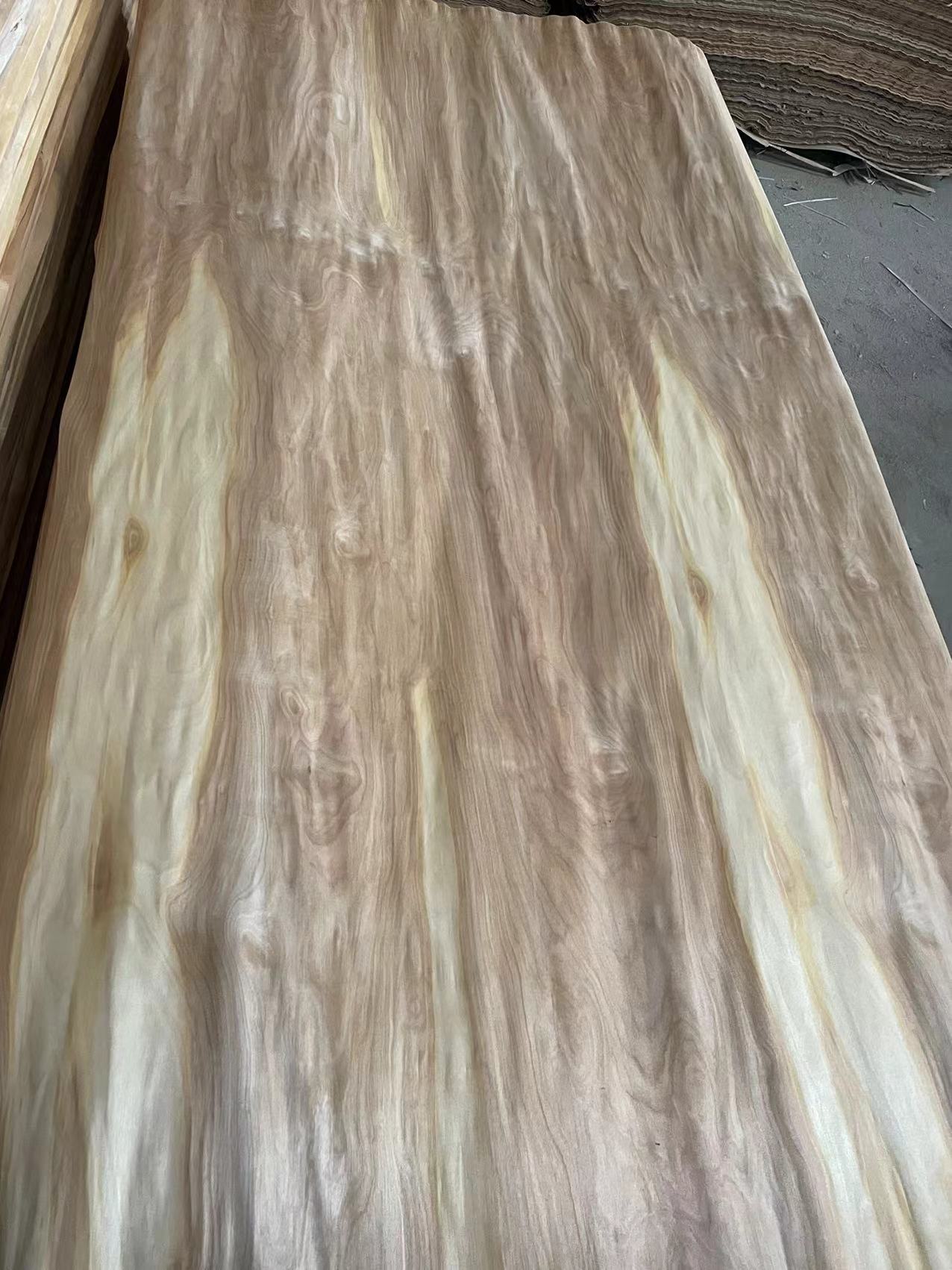
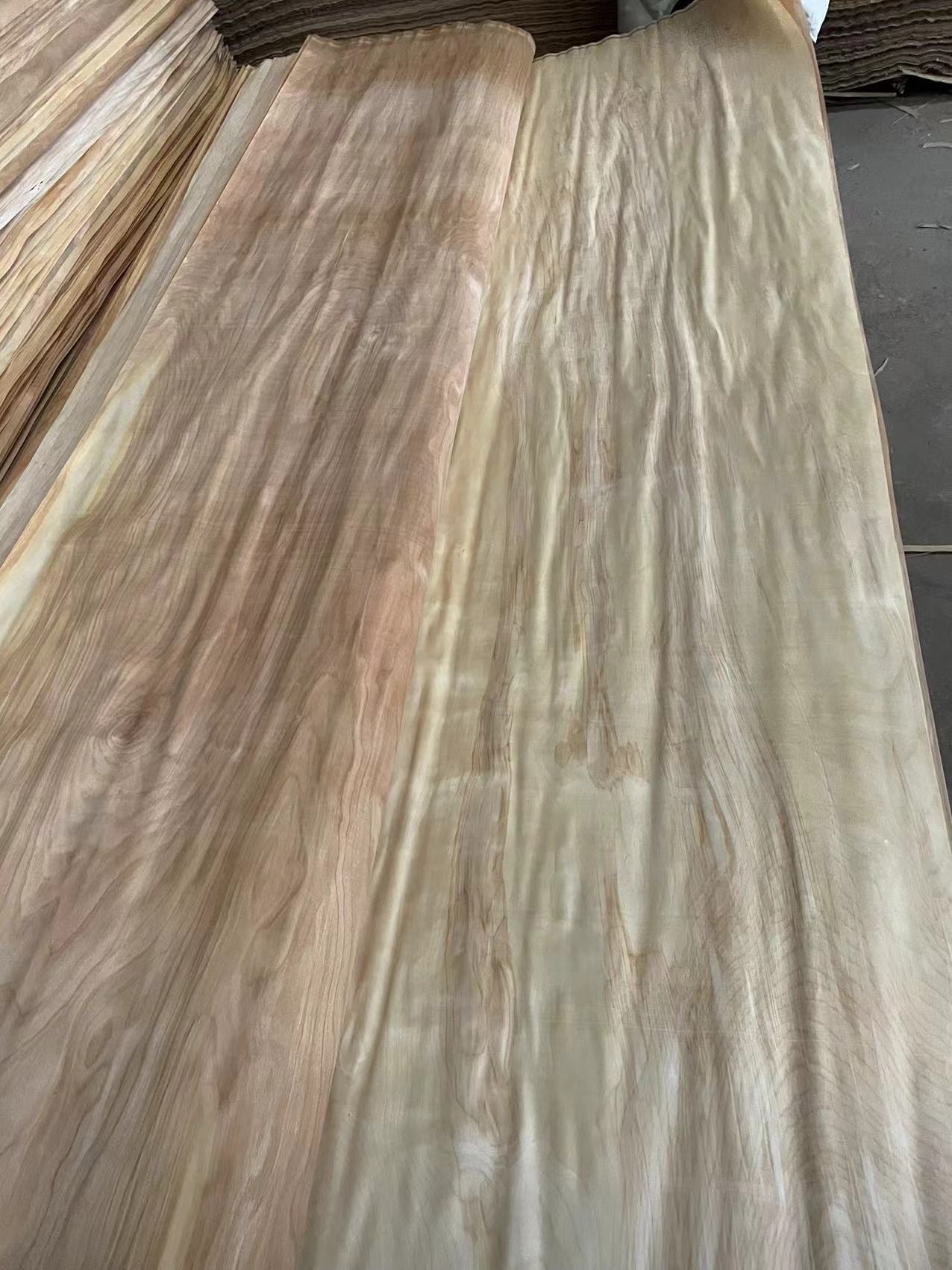
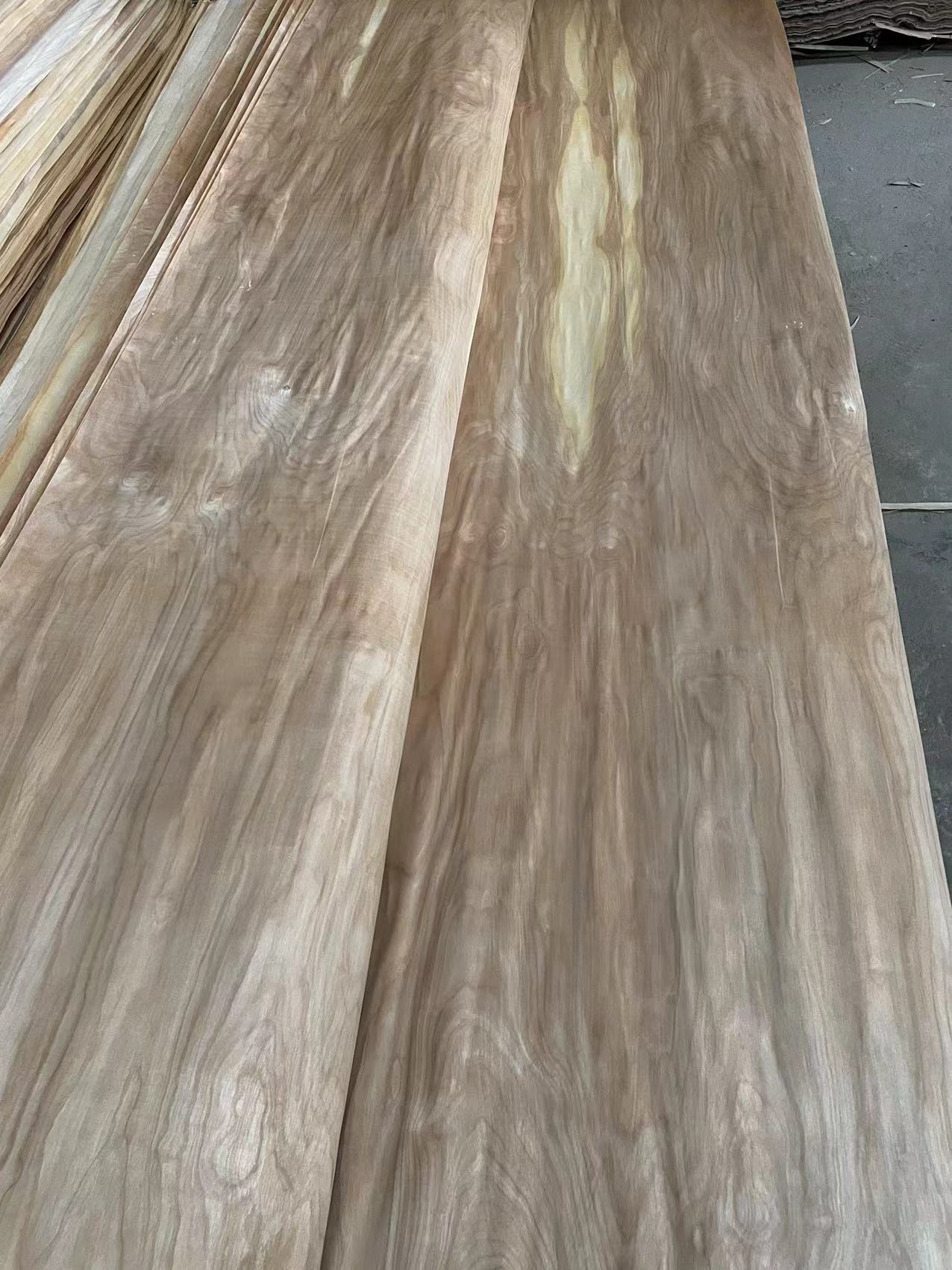
Two species, two distinct aesthetics
White birch
Light, bright tone with subtle grain — ideal for modern, Scandinavian, and minimalist interiors where a clean, airy look is required.
Yellow birch
Warm golden hue with fine, straight grain — suited to traditional, rustic, and transitional furniture where wood character is a design feature.
Both species share birch's defining properties: high density, scratch resistance, and excellent bonding characteristics that make it one of the most reliable veneer substrates available.

Production process
From forest to finished veneer sheet
1
Harvesting
Birch logs are felled in winter when bark is softest and moisture content is most stable, simplifying debarking and reducing drying time.
2
Debarking
Bark is stripped mechanically or by hand before any cutting begins, preventing bark inclusions in the finished veneer.
3
Log conditioning and crosscutting
Logs are cut to processing length and may be steamed or soaked to soften the wood, improving peel quality and reducing knife checking.
4
Rotary peeling (lathe cutting)
The log rotates against a fixed knife, producing a continuous ribbon of veneer at the target thickness with a tolerance of ±0.03 mm.
5
Drying
Veneer sheets pass through roller or jet dryers to bring moisture content to ≤18%, eliminating the dimensional instability that causes warping and glue-line failure.
6
Grading and packing
Dried sheets are visually graded against IHPA or customer-specified standards, bundled by grade, and wrapped for export.

Specifications
Standard product parameters
Sheet sizes
4×8 · 4×7 · 3×7 · 4×6 · 3×6 ft
Thickness range
0.15 – 0.9 mm (±0.03 mm)
Formaldehyde
Low emission — eco-safe
Quality grades
| Grade | Knots allowed | Discoloration | Typical use |
| Grade C | None | None | Premium face plywood, furniture fronts |
| Grade D+ | Sound knots ≤15 mm | Slight | Decorative panels, cabinet interiors |
| Grade D | Black knots ≤40 mm | Sound discoloration | Structural plywood core, general lamination |
| Grade E | Knots and holes permitted | Permitted | Core stock, packing boards |


Where rotary cut birch veneer is used
Plywood facing
MDF, block board, LVL
Furniture
Flat panels, drawer fronts
Doors & flooring
Interior and exterior
Wall panels
Decorative cladding
Curved parts
Bent lamination, chairs
Cabinetry
Kitchen, bath, millwork
Why choose our veneer
Quality and sourcing advantages
Multi-country sourcing for supply security
Stocking from China, Russia, Latvia, and Estonia means consistent availability regardless of regional harvest disruptions or export restrictions.
Low formaldehyde emissions — safe for indoor use
Compliant with international emission standards, making these veneers suitable for residential furniture, school buildings, and other sensitive interior environments.
Excellent bonding — no glare, no odor
The flat, smooth surface bonds cleanly with standard PVA, urea-formaldehyde, and melamine adhesives without surface preparation, cutting production time.
Custom specifications on request
Non-standard thicknesses, sheet dimensions, and grade combinations are available for OEM buyers and high-volume plywood mills.
Source countries
China
Russia
Latvia
Estonia
FAQ
Frequently asked questions
What is the difference between rotary cut and flat-sliced veneer?
Rotary cutting peels the full log circumference, producing wide sheets with a cathedral or wild grain pattern. Flat-slicing cuts straight through the log like a loaf of bread, yielding narrower sheets with a more uniform, linear grain. Rotary cut is more economical and better suited to plywood; flat-sliced is preferred for high-end furniture face matching.
What thickness should I order for plywood face veneer?
For standard decorative plywood face veneer, 0.35 mm to 0.5 mm is most common — thin enough for flexibility and economy but thick enough to sand without breaking through. For bent lamination or curved furniture parts, thinner sheets (0.15 – 0.2 mm) are preferred for tighter radii.
Is birch veneer suitable for exterior applications?
Birch veneer itself is not naturally weather-resistant. For exterior use, the finished plywood or panel must use a waterproof adhesive (phenol-formaldehyde) and receive a UV-stable coating or overlay. The veneer grade selected should be C or D+ to minimise open defects that can trap moisture.
Can I order mixed grades in a single shipment?
Yes. Mixed-grade orders are accommodated to match typical plywood mill workflows where face, back, and core layers each require a different grade specification. Contact us with your full BOM for a consolidated quote.
Request a quote or samples
Specify thickness, grade, and sheet size — we'll respond within one business day.
Get a quote ↗