
Light, contemporary appearance
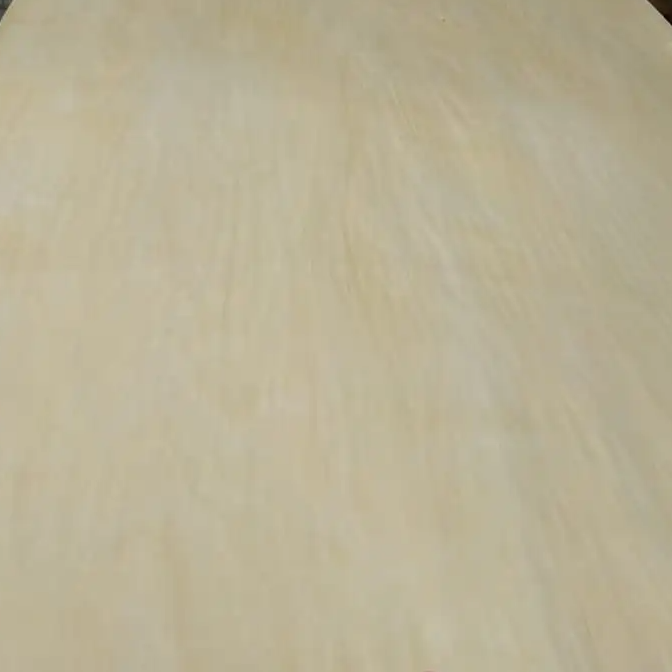
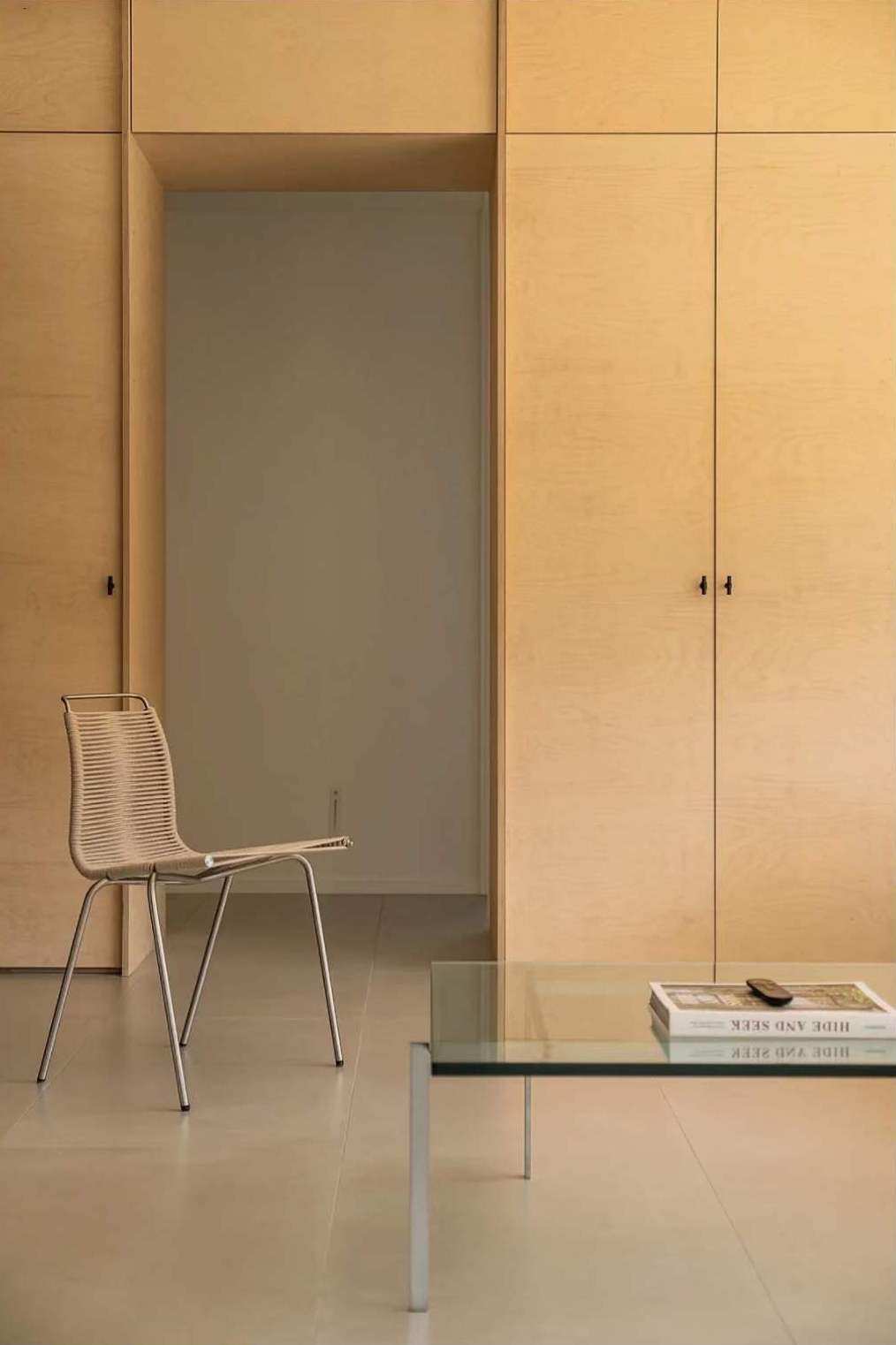
Pale cream-to-golden tones and fine grain support Scandinavian, modern and minimalist design directions.









| Quantity: | |
|---|---|

0.3mm*1250*2500mm 4'x6,4‘x8',4'x10',5'x8',5'x10'
4408901999
Birch veneer sheets for furniture, cabinetry, doors, decorative panels and interior millwork—specified by cut, grade, matching, thickness and end-use requirements.
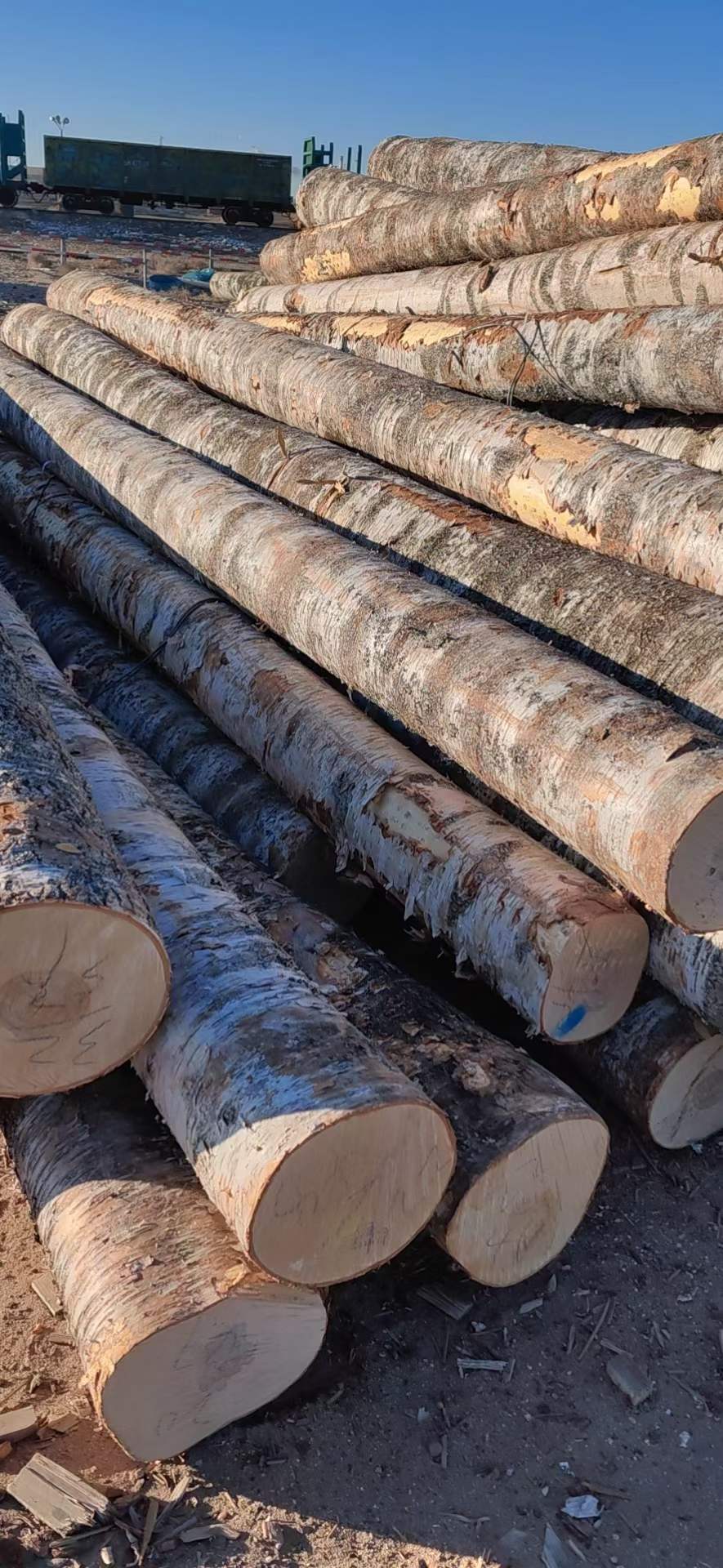
Birch veneer is a thin sheet cut from natural birch logs. It may be supplied as raw veneer for pressing and finishing, or used as the decorative face of a veneered panel. Its typically pale color and fine texture suit modern furniture and architectural interiors.
Appearance is influenced by the log, cutting method, sheet sequence, matching method and finish. For repeat projects, the purchase specification should define acceptable color, grain and natural-character limits rather than relying on a grade name alone.
Pale cream-to-golden tones and fine grain support Scandinavian, modern and minimalist design directions.
Select the cut and lay-up pattern according to the desired grain movement, panel size and project budget.
Stains, lacquers and UV finishes may be used after sample testing and process confirmation.
Thickness, dimensions, grade, matching, backing or substrate can be discussed against your drawings and use case.
The values below describe available or requested project options—not a universal stock promise. Final specifications must be confirmed in the quotation, sample approval and purchase order.
| Product | Natural birch veneer sheets; project-based veneered panel options |
|---|---|
| Cut options | Sliced and rotary-cut; saw-cut only when specifically confirmed |
| Thickness | Common quoted project range: 0.2–2.0 mm; availability depends on cut, log and order requirements |
| Dimensions | Natural sheet dimensions vary by log and cut; 1220 × 2440 mm and other panel sizes may be discussed for veneered panels |
| Appearance | Pale cream to light golden tones; natural variation in color, grain, figure and character |
| Matching | Book match, slip match or random match, subject to cut, sheet sequence and project confirmation |
| Panel substrates | Plywood, MDF or particleboard options for project-based panel supply |
| Surface | Raw/sanded veneer; pre-finished options subject to coating-system confirmation |
| Certification | FSC-certified material may be available for selected wood species, subject to confirmation |
| Packing | Protective export packing configured for veneer or panel format and shipment method |
*Dimensional tolerances, moisture content, defect limits, panel bond performance, emissions and test standards should be written into the agreed specification where applicable.
Cutting method changes the grain pattern, sheet continuity, thickness options and cost structure.
Individual sheets are sliced from a flitch. This route is commonly selected when grain direction, sequence matching and decorative consistency are important.
The log is peeled around its circumference to produce a continuous sheet with broad, flowing grain—well suited to larger surfaces and volume programs.
Thicker, texture-forward material may be available for selected projects. Confirm practical thickness, dimensions, yield and minimum order before specification.
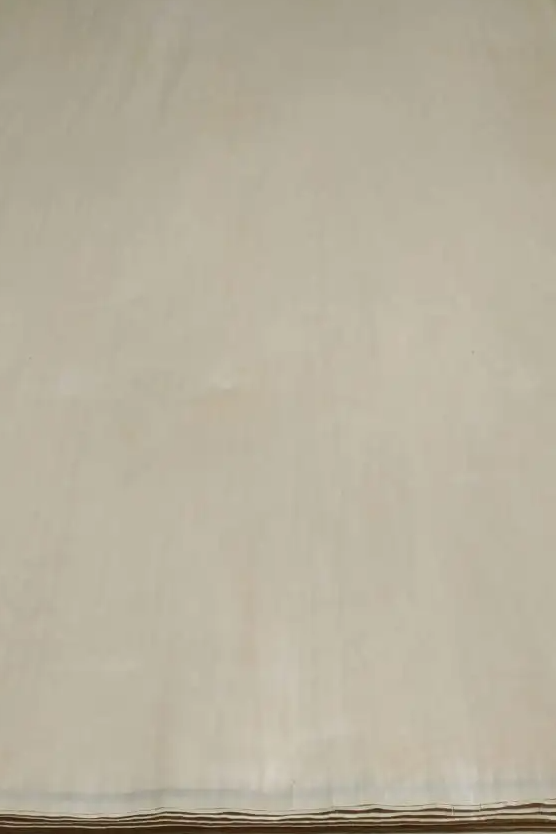
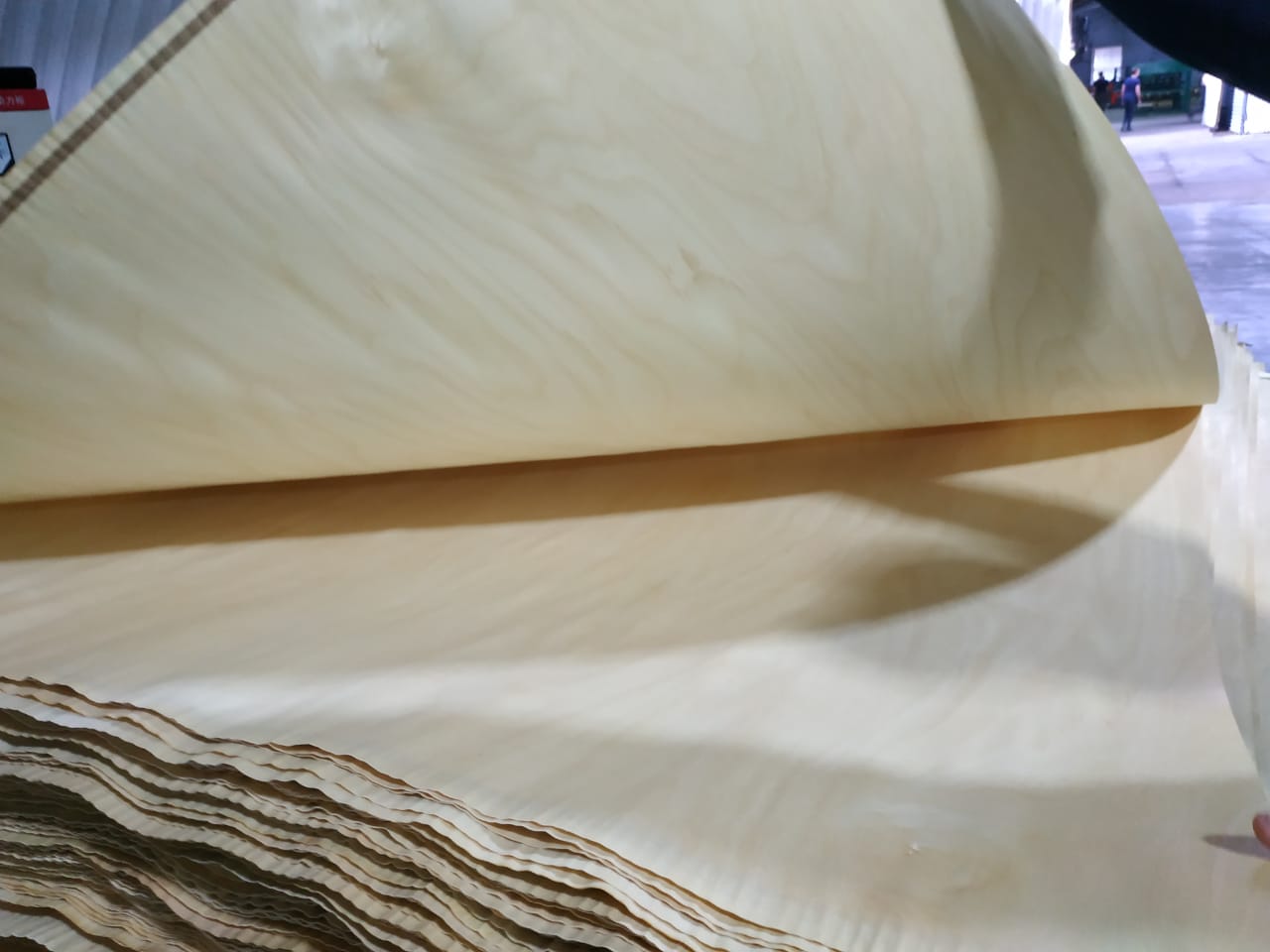
These workshop images show natural birch veneer in sheet and stack form. Tone, figure and sheet dimensions vary by log and production batch.
 Production stack · pale natural tone
  Sheet sequence · natural grain Thin-sheet flexibility · visible figure
 Final construction, adhesive, substrate, coating and edge treatment must match the service environment.
Tables, wardrobes, shelving, desks and visible furniture components.
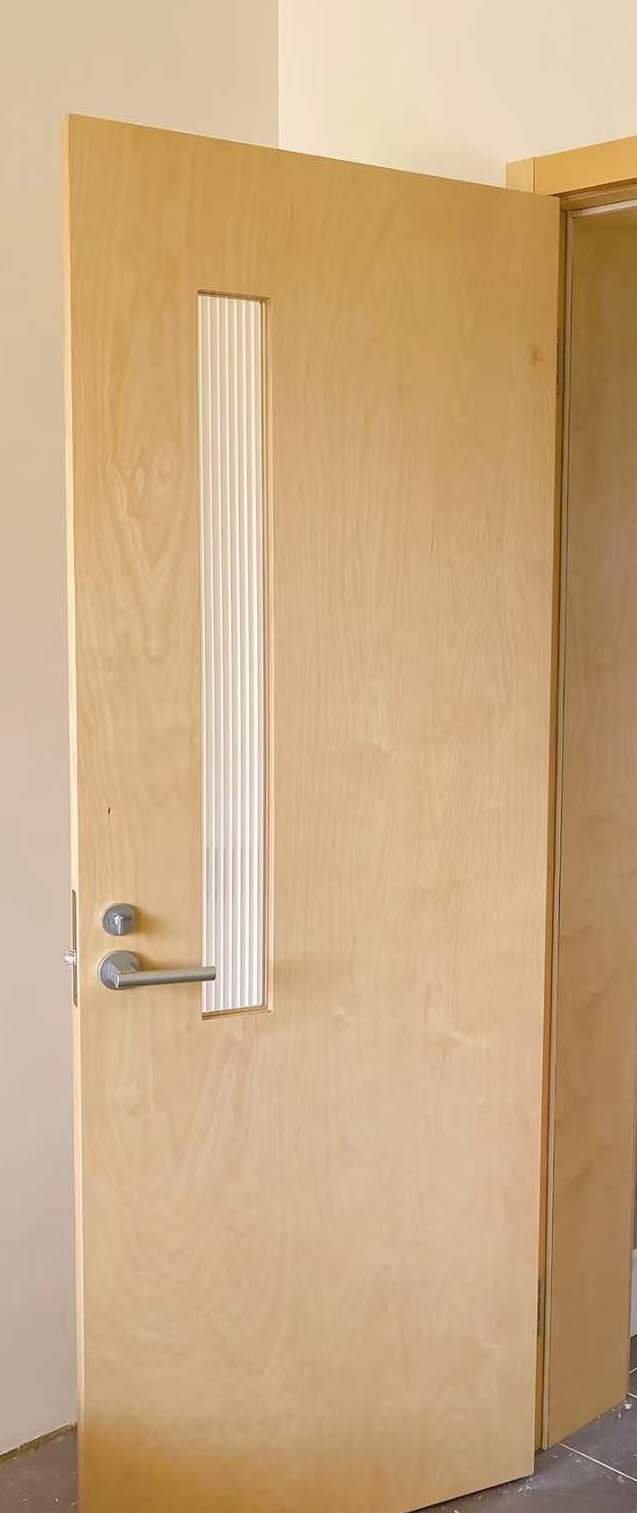
Doors, drawer fronts, carcass faces and coordinated millwork surfaces.
Interior wall cladding, decorative panels, partitions and interior doors.
Retail, hospitality, residential and commercial fit-out components.
A written visual standard reduces disputes and keeps samples, production and inspection aligned.
Store veneer flat, dry and protected from direct sunlight. Allow material to acclimatize under controlled workshop conditions before pressing or finishing.
Panel flatness depends on substrate condition, face/back balance, adhesive spread, pressing parameters and moisture—not on the decorative veneer alone.
Moisture resistance, bond durability and emissions apply to the completed panel system. State the applicable test method and acceptance limit in the purchase specification.
Birch veneer is a thin sheet cut from natural birch logs. Raw veneer can be pressed onto a suitable substrate, while veneered panels combine the decorative birch face with a specified panel core.
Sliced veneer is produced as individual sequential sheets and is often chosen for controlled decorative matching. Rotary veneer is peeled as a continuous sheet and usually shows broader, more flowing grain.
Order against a representative approved sample, define permitted natural variation, use sequenced sheets where required and avoid mixing unapproved batches. Perfect uniformity should not be expected from natural wood.
Yes, subject to process testing. Birch can show uneven stain absorption, so a compatible sealer, stain schedule and coating system should be tested on production-representative veneer before approval.
The veneer alone does not determine moisture performance. The substrate, adhesive, panel construction, edge sealing and finish must be specified and tested for the intended environment. It is not intended for unprotected exterior exposure unless a complete system is expressly approved.
Sample availability, sample freight and minimum order are confirmed by project. FSC-certified material may be available for selected wood species, subject to confirmation of scope, chain-of-custody requirements and order availability.
Send the cut, grade, thickness, dimensions, quantity, application and destination. We will confirm available options against your project requirements.
WhatsApp: +64 20 496 7986


