
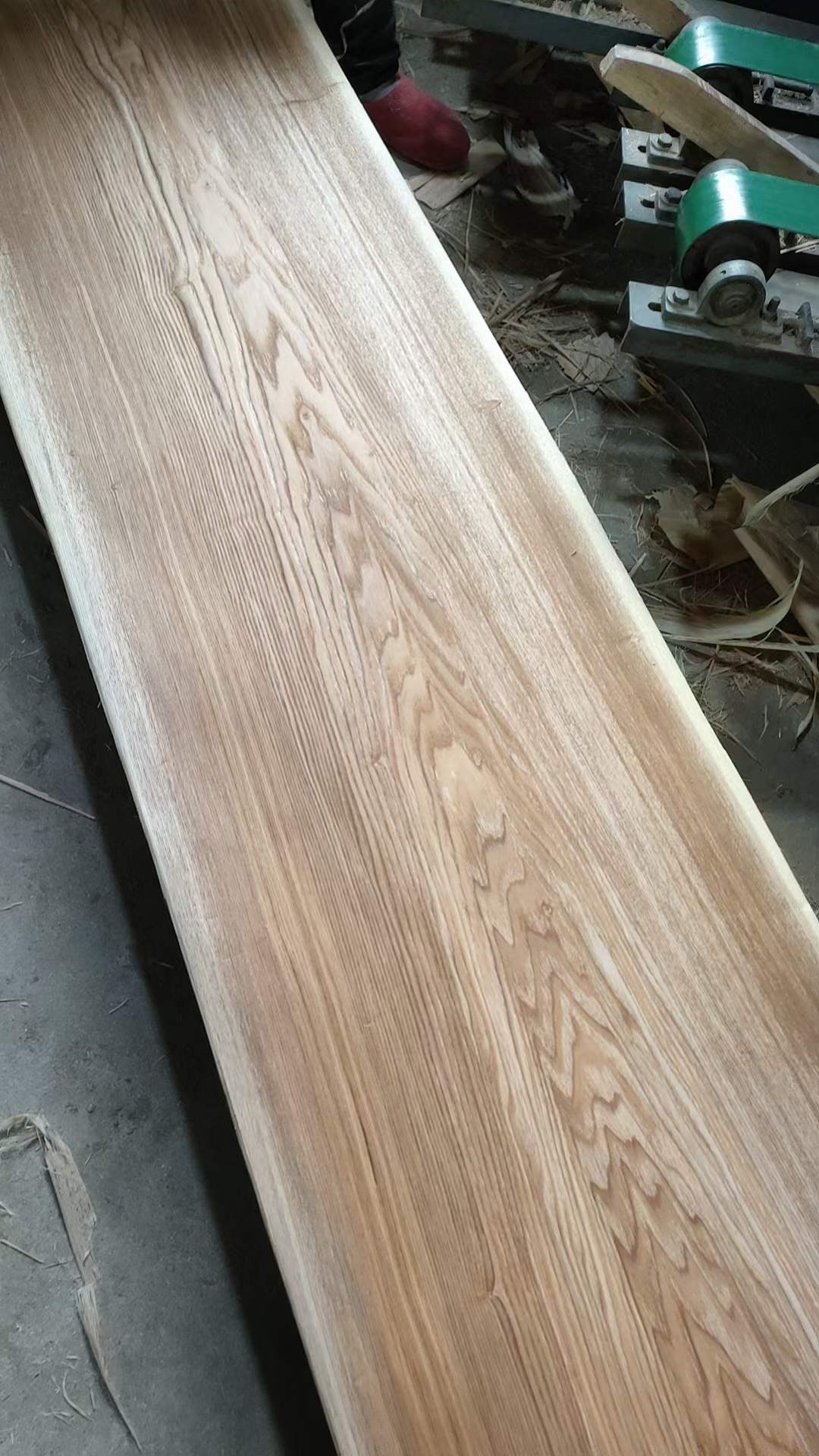
Visible natural figure
Straight, wavy or cathedral-like movement can be selected according to the cut and approved sample.





| Quantity: | |
|---|---|

Sliced natural ash veneer for furniture, cabinetry, decorative panels and interior millwork—specified by cut, thickness, dimensions, grade and approved appearance.
China ash veneer is produced by slicing ash logs into thin decorative sheets. Depending on the cutting orientation and position in the flitch, the grain can read as straight and restrained or display a broader cathedral figure.
Its light brown-to-warm neutral appearance provides a versatile base for natural clear coating or a tested stain system. Final appearance depends on the log, slicing method, sheet sequence, matching, sanding and finish.
Straight, wavy or cathedral-like movement can be selected according to the cut and approved sample.
Light brown tones support contemporary furniture and interior programs without visually overpowering the design.
Clear coats, stains and paint systems may be used after checking absorption and final color on production-representative material.
Thickness, dimensions, grade, matching, backing and packing can be discussed against your manufacturing requirements.
The following items are quotation parameters, not universal stock guarantees. Final values must be confirmed in the sample approval, quotation and purchase order.
| Product | Natural sliced China ash veneer |
|---|---|
| Botanical reference | Fraxinus chinensis; confirm botanical identity and origin by batch |
| Thickness | Requested range: 0.2–2.0 mm; availability and tolerance subject to cut and order confirmation |
| Dimensions | Sheet length and width depend on log, flitch and trimming specification |
| Grain | Straight, wavy or cathedral figure according to cutting orientation and flitch position |
| Color | Light brown to warm neutral tones with natural batch variation |
| Grades | A and D may be quoted as supplier grades; written defect limits and approved samples take priority over grade names |
| Matching | Book match, slip match or random match, subject to sheet sequence and project confirmation |
| Substrates | MDF, plywood or particleboard may be used in a properly specified veneered panel system |
| Certification | FSC-certified material may be available for selected wood species, subject to confirmation |
| Packing | Protective export packing configured according to sheet size, backing and shipment method |
*Moisture content, tolerance, natural-character limits, repair acceptance, backing, sanding and test requirements should be included in the agreed specification.
Select grain against an actual batch sample. Natural variation cannot be controlled by a descriptive name alone.
Actual grain detail · workshop material Natural veneer grades vary between suppliers. Use a representative approval sample plus measurable acceptance criteria.
Selected for clearer grain and a more uniform visual field, within agreed limits for color variation, natural marks, repairs and open defects.
More natural variation and defects may be permitted. Suitable only where the approved appearance and downstream processing can accept those characteristics.
The substrate, adhesive, lay-up, edge treatment and coating—not the veneer alone—determine final panel performance.
Tables, desks, wardrobes, shelving and visible case-goods components.
Door fronts, drawer faces, fitted storage and coordinated millwork.
Interior wall and ceiling panels, doors and feature surfaces.
Decorative veneer faces for engineered acoustic panels; acoustic performance comes from the complete tested system.
Three decisions have the greatest influence on visual consistency and manufacturing suitability.
Review representative sheets under consistent lighting and approve both the acceptable range and unacceptable defects before production.
Confirm substrate condition, adhesive, spread rate, pressing parameters, sanding and coating on actual production material.
Keep veneer flat, dry and protected from direct sunlight, then condition it to the workshop environment before lay-up.
It is a thin decorative sheet sliced from ash logs and selected for its light warm tone and visible grain. Botanical identity and origin should be confirmed for the ordered batch.
The veneer may show straight, wavy or cathedral-like grain depending on the cutting orientation and flitch position. Select against actual samples rather than the description alone.
Yes, but color and absorption can vary naturally. Test the full sanding, sealer, stain and topcoat schedule on production-representative veneer before approving the finish.
Choice depends on the substrate, pressing process, surface geometry and required sanding allowance. The requested 0.2–2.0 mm range is subject to availability and should be confirmed through trials.
It can be used as a decorative face in an engineered acoustic panel. Sound absorption and fire performance must be demonstrated by the complete panel construction and applicable tests.
Approve a representative batch sample, define permitted color and grain variation, specify matching and sequence requirements, and avoid mixing unapproved production batches.
Send the thickness, dimensions, quantity, grade, grain preference, application and destination. We will confirm available options against your project requirements.
WhatsApp: +64 20 496 7986


